Electric vehicles batteries-requirements & challenges
Electric vehicles batteries-requirements & challenges
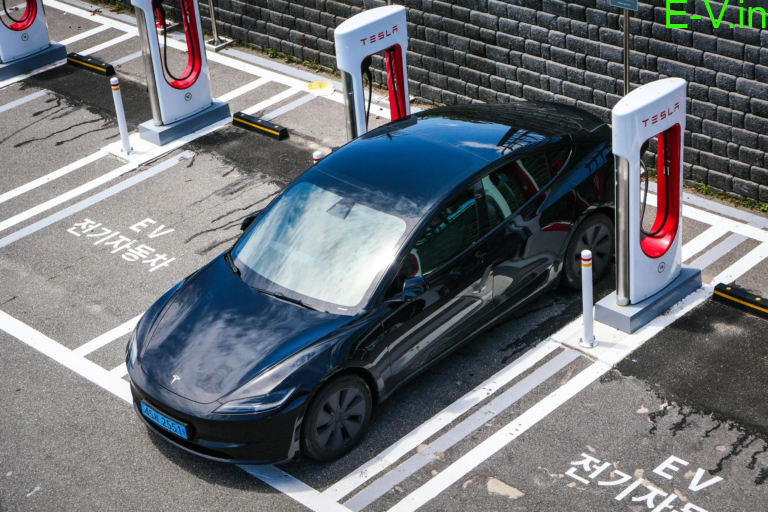
By the commercialization of lithium-ion batteries (LIBs) tremendous growth has been made to increase energy density, reduce cost, and improve the performance of batteries. The advances in battery technology drive the development of electric vehicles (EVs). Electric vehicles help to eliminate car emissions and reduce petroleum reliance, almost all automakers have launched EV production, and multiple countries and cities have announced plans to ban internal combustion engine (ICE) vehicles in the next 10 to 30 years. Read further to know more about Electric vehicles batteries-requirements & challenges.
Electric vehicles batteries-requirements & challenges
The growth of EV adoption is partially driven by government policy and regulation In order to compete with ICE vehicles, EVs still need to overcome some barriers, particularly in battery technology.
General requirements and challenges of implementing batteries in EVs
The driving range is one of the major concerns of customers regarding EVs, and it is mainly determined by the battery energy densities (the amount of energy stored per unit volume or weight). As space and weight in EVs are limited, the batteries with higher energy densities can drive vehicles a longer distance.
LIBs have one of the highest energy densities (250–693 Wh/L and 100–265 Wh/kg) of current battery technology, but it is still significantly less that of gasoline. A large amount of batteries is required to reach the 200-300 miles driving range.
The energy densities of LIBs head toward a saturation limit, next-generation batteries (with energy densities >750 Wh/L and >350 Wh/ kg) that are beyond LIBs are needed to further increase the driving range more effectively. New designs, such as Li-Sulfur, Li-Air, or Mg-ion batteries, have been explored. Although they have higher theoretical energy densities than LIBs have, they suffer from other issues, such as safety (due to dendrite formation) or poor cyclability, which prevents their application in EVs
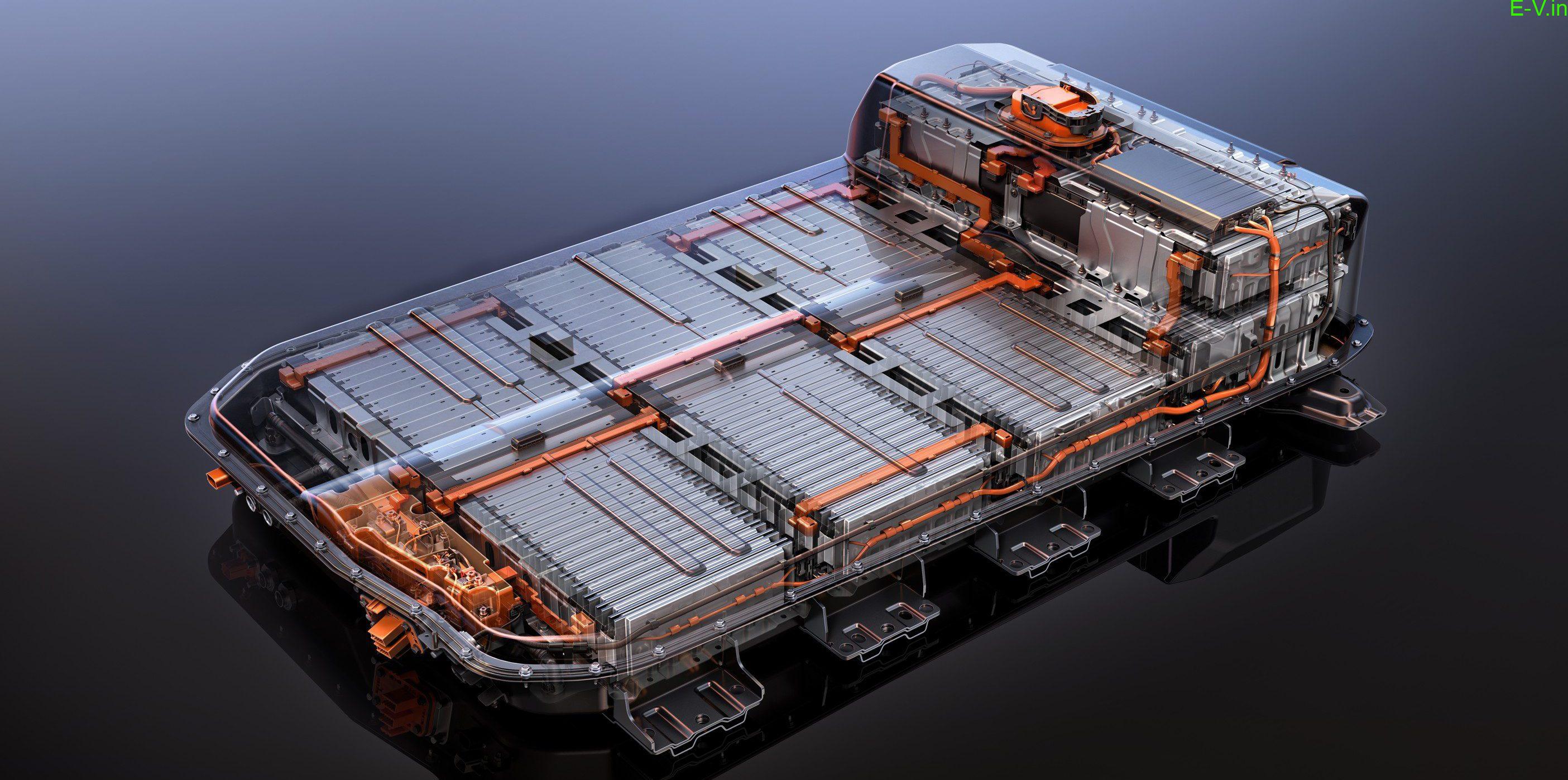
In addition, battery packs in EVs include not only cells but also other components like busbars, thermal components, and battery management systems. Accounting for this added hardware further reduces the overall pack level energy densities. Thus, improving both cell design and pack efficiency is critical to increasing the energy densities of EV batteries.
Cost
One benefit of EVs is their lower operating costs relative to those of ICE vehicles. However, their high upfront purchase price remains one major obstacle for wide EV adoption. As the battery cost determines the EV price, it needs to be reduced to make EVs more affordable. The battery cost has dropped dramatically (currently $200/kWh for pack) since the first large-volume EV production.
The battery pack and cell cost should be below $125/kWh and $100/kWh, respectively when it is compared to ICE vehicles. The battery pack value stream is extremely complex, consisting of component manufacture, cell production, module production, and pack assembly. In current battery chemistry, cobalt is commonly used in cathodes due to its good thermal stability.
On the other hand, it is one of the most expensive battery materials since most of it is mined in unstable regions. Eliminating cobalt can a cell from a pack usually requires reassembling the entire module and replacing the damaged cooling plate, which can be expensive.
Because of that, EV batteries are generally not serviceable, and their life is expected to be the same as the vehicle life. According to The U.S. Advanced Battery Consortium, the target life for EV batteries is 15 years. Here, the battery life generally means the time when its capacity decreases to 80% of its original capacity.
Lifespan
To maximize battery performance, battery cells in EVs are fully constrained such that they are not only compressed in modules to reduce swelling but also connected to the cooling plate very tightly via thermal interface material to improve cooling efficiency.
Replacing a cell from a pack usually requires reassembling the entire module and replacing the damaged cooling plate, which can be expensive. Because of that, EV batteries are generally not serviceable, and their life is expected to be the same as the vehicle life.
Fast Charging and Power Capability
In addition to the driving range, charging time is also central to customer experience. Most current EVs take hours to fully charge. The charging of EVs are done overnight or charging during work, but it becomes inconvenient when driving a long distance that requires frequent recharging. The main barriers to fast charging are cell chemistry and material properties.
In LIBs, lithium ions transport from cathode to anode during charging, and their speed is controlled by the intercalation rate and diffusivity of lithium ions. When the charging rate is high, lithium plating occurs at the anode surface and cell temperature increases rapidly, which affect battery capacity, life, and safety.
Safety
Safety is one of the most critical factors to EV battery design, since battery failure may lead to a catastrophic consequence. Due to the importance of safety, many countries/regions have regulations for EVs and or batteries such that they must pass a series of tests (impact, thermal, vibration, etc.) before entering the market.
The Battery failure can be induced by either external abuse foe example crash, penetration, over-charge/discharge, thermal ramp or internal mechanisms e.g., lithium dendrite growth. These events may trigger short-circuits or redox reactions at electrodes, which generate heat and activate exothermic reactions, and then can eventually cause thermal runaway.
To mitigate thermal runaway, novel battery materials are developed. However, most of them currently affect cell performance, and tradeoffs should be considered. For instance, aqueous electrolytes are non-flammable but have a narrow electrochemical stability window, while solid-state batteries have high mechanical rigidity, but suffer from high interfacial impedance and poor cycle stability.
Also, read the related article: Battery capacity needs to power EVs in India from 2020 to 2035
If you are an EV manufacturer or EV Dealer or EV Supporter who want to share news related to electric vehicles on our website, please send an email to crm@electricvehicles.in
For the latest electric vehicles news, follow electricvehicles.in on Twitter, Instagram,Facebook and our YouTube Channels English, Hindi,Telugu and Tamil